
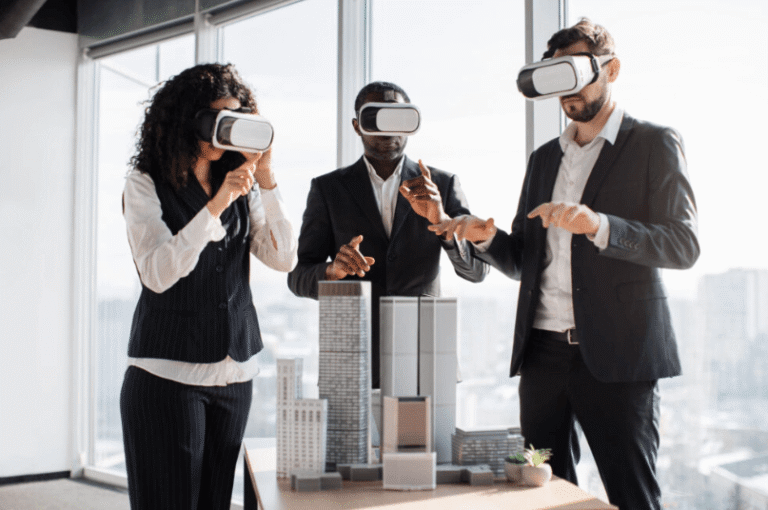
Virtual reality is revolutionizing real estate marketing in significant ways. By providing immersive virtual tours, it allows potential buyers to explore properties without geographical constraints. This technology enhances property showcases and offers interactive staging, helping clients visualize their future homes. As the industry evolves, VR’s role in improving client engagement and streamlining transactions becomes increasingly apparent. What implications could this have for the future of real estate?
Enhancing Property Showcases With Virtual Tours
Virtual tours are revolutionizing the way properties are showcased in real estate marketing.
By offering immersive experiences and realistic simulations, prospective buyers can explore homes from anywhere, breaking geographical barriers.
This innovative approach not only enhances engagement but also empowers individuals to make informed decisions.
Embracing virtual tours allows freedom in exploration, ensuring that every detail of a property can be appreciated.
See also: The Impact of Smart Cities on Urban Living
Interactive Staging: Visualizing Potential Spaces
As buyers increasingly seek personalized experiences, interactive staging has emerged as a powerful tool for visualizing potential spaces in real estate.
By leveraging virtual design, agents can create immersive experiences that allow clients to reimagine properties according to their preferences.
This innovative approach not only enhances engagement but also empowers buyers to envision their future homes, fostering a deeper emotional connection to the space.
Improving Client Engagement and Communication
Effective communication is essential in fostering strong relationships between real estate agents and their clients, especially when navigating the complexities of property transactions.
Virtual reality enhances client engagement through immersive experiences that allow clients to explore properties virtually. This innovative approach facilitates meaningful client feedback, empowering agents to tailor their services and ultimately creating a more satisfying and informed journey in real estate.
The Future of Real Estate Transactions With VR
The integration of virtual reality into real estate marketing is not just a passing trend; it is paving the way for the future of property transactions.
By combining VR with blockchain integration, buyers can engage in secure remote transactions, enhancing transparency and efficiency.
This innovative approach empowers individuals to explore properties without geographical constraints, ultimately revolutionizing how real estate is bought and sold.
Conclusion
In the realm of real estate marketing, virtual reality emerges as a modern-day alchemist, transforming mere listings into captivating experiences. As prospective buyers traverse virtual landscapes, they are not just viewing properties; they are stepping into a narrative of home and belonging. This innovative technology heralds a new dawn for real estate transactions, weaving efficiency with emotional resonance. Embracing VR is not merely an option but a necessity for those aiming to thrive in this tech-driven marketplace.